
The hidden risks of relying on plastic water bottles at sea
- Geen onderdeel van een categorie
At sea, few things are more critical than a safe and reliable supply of drinking water. Every decision onboard ultimately impacts crew safety, well-being, and smooth operations. While plastic water bottles may appear to offer a straightforward solution, they introduce risks that compromise reliability, create dependency, and can endanger crew welfare.
Here’s why bottled water isn’t as safe or reliable as it looks.
1. A fragile supply chain at sea
Plastic water bottles depend on an uninterrupted supply chain. A delay in delivery, miscalculation in provisioning, or port restrictions can quickly lead to shortages. Unlike spare parts, safe drinking water cannot simply be “managed” if stocks run low. Crew hydration is non-negotiable, and bottled water creates a single point of failure that puts safety at risk.
2. Crew health and safety risks
Hydration directly affects alertness, decision-making, and overall health. A misjudged stock level or unexpected voyage extension can leave crews rationing bottles or consuming less than they need. Even short-term dehydration can impact reaction times and concentration, which can be a dangerous risk in high-stakes maritime environments.
On the other hand, overstocking leads to heavy and unstable pallets stored on board. Handling, moving, and storing them increases the risk of injury to crew members. Something as basic as supplying water should never create additional hazards.

3. Operational vulnerabilities
Reliance on plastic water bottles creates hidden operational vulnerabilities:
- Storage hazards: Bulk storage of bottles takes up critical space needed for emergency provisions or spare parts. In rough seas, unsecured loads pose a safety risk.
- Waste management pressure: Empty bottles accumulate quickly, and inadequate storage can lead to hygiene risks or compliance violations at port.
- Manpower strain: Moving pallets and distributing bottles diverts crew time from essential safety-critical duties.due
4.Regulatory and compliance concerns
The maritime industry is under increasing scrutiny regarding both safety and sustainability. Many ports are tightening restrictions on single-use plastics, while flag states demand stricter controls on potable water. Relying on plastic water bottles not only risks non-compliance but also undermines confidence in your vessel’s ability to provide a safe onboard water supply.
A safer, more reliable alternative to plastic water bottles
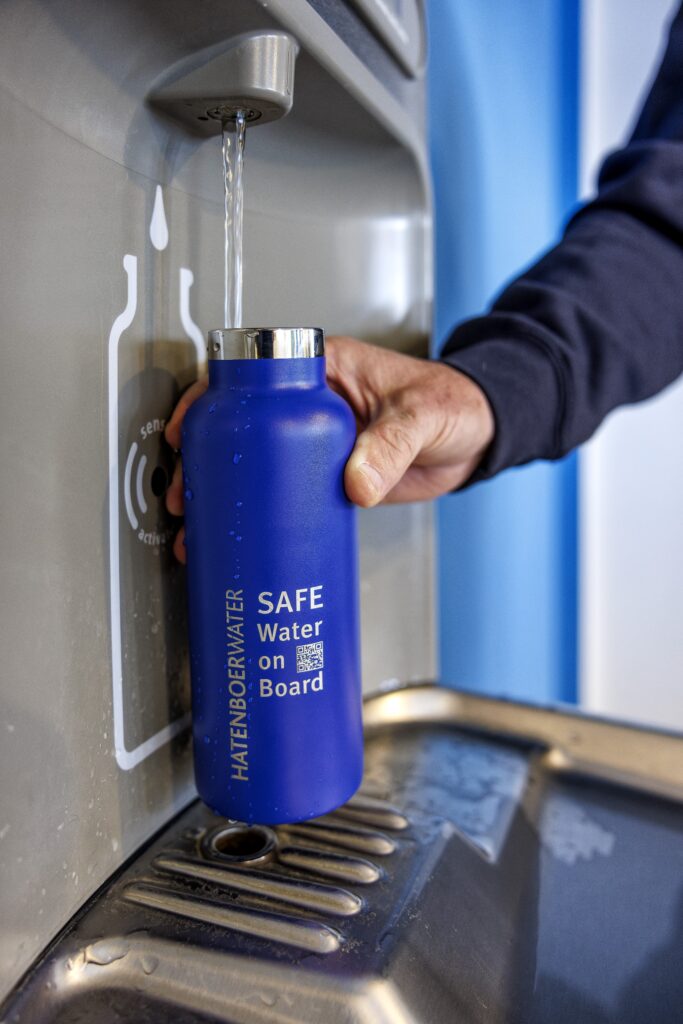
Modern onboard water treatment systems provide a secure, controlled, and dependable source of drinking water that doesn’t depend on port deliveries or plastic packaging. With Hatenboer-Water’s Plastic Free @Sea filling stations and refillable stainless-steel bottles, crews always have direct access to safe, high-quality drinking water.
The advantages go far beyond cost or sustainability:
- Continuous availability: no risk of supply shortages.
- Crew protection: no heavy pallets to handle, no rationing in emergencies.
- Trust in quality: water tested, treated, and documented to meet maritime standards.
- Operational resilience: fewer vulnerabilities linked to suppliers, storage, or waste.
By investing in our Plastic Free @Sea solution, ship operators ensure their crews always have access to safe, trustworthy drinking water without the dangers of supply shortages, storage hazards, or plastic dependence. It’s not just a smarter choice for the environment or the budget. It’s a safer choice for your crew. Download the brochure here.
Hoe kunnen we helpen?
Neem contact op voor informatie, advies, een offerte of een andere vraag. Wij zijn er om u te helpen!
Kies uw regio
Neem contact op

Offerte aanvragen